
If you have ever been weighed at a GP appointment, joined a gym, or looked up healthy weight ranges online, you have probably come across three letters: BMI. BMI stands for body mass index, and it is one of the most widely used tools for getting a quick sense of whether a person’s weight sits within a broad range that is generally associated with better health. For women in particular, BMI raises questions that a simple number cannot fully answer: does it account for muscle, for pregnancy, for the menopause, or for the natural differences between bodies? This guide explains, in plain English, how to check BMI for women, what the result means in general terms, where BMI falls short, and what to do with the information once you have it. It is not a verdict on your health, and it is certainly not a reason to judge yourself or anyone else by a single figure.
Please note: this article is general information only and is not medical advice. BMI is a screening tool, not a diagnosis, and it cannot tell you whether you are healthy or unwell on its own. If you are concerned about your weight, your health, or any result you obtain, speak to your doctor or GP, who can assess your individual situation properly.
What Is BMI?
Body mass index is a simple calculation based on two measurements: your height and your weight. It gives a single number that places your weight in relation to your height, so that a taller person and a shorter person can be compared on a roughly equal footing. The idea is straightforward: weight alone does not tell you very much, because a weight that is perfectly healthy for a tall person might be high for a shorter person, and vice versa. By relating weight to height, BMI provides a standardised starting point for conversations about weight and health.
BMI was developed as a population-level tool, and that origin matters. It was designed to help researchers and health services look at patterns across large groups of people, not to capture the full health picture of any one individual. Health professionals still use it because it is quick, inexpensive, non-invasive, and easy to repeat over time. A rising or falling BMI trend can prompt useful conversations, and BMI is often used alongside other checks, such as blood pressure and blood sugar, to build a broader picture. But it was never intended to be the whole picture, and treating it as if it were leads to many of the misunderstandings discussed below.
It is also important to understand that BMI does not measure body fat directly. It does not distinguish between fat, muscle, bone and water, and it says nothing about where fat is carried on the body, which matters for health. Two women with the same BMI can have quite different body compositions, different fitness levels, and different health profiles. That is why a BMI result should always be read as a prompt for a broader conversation, not as a final answer.
How to Check Your BMI
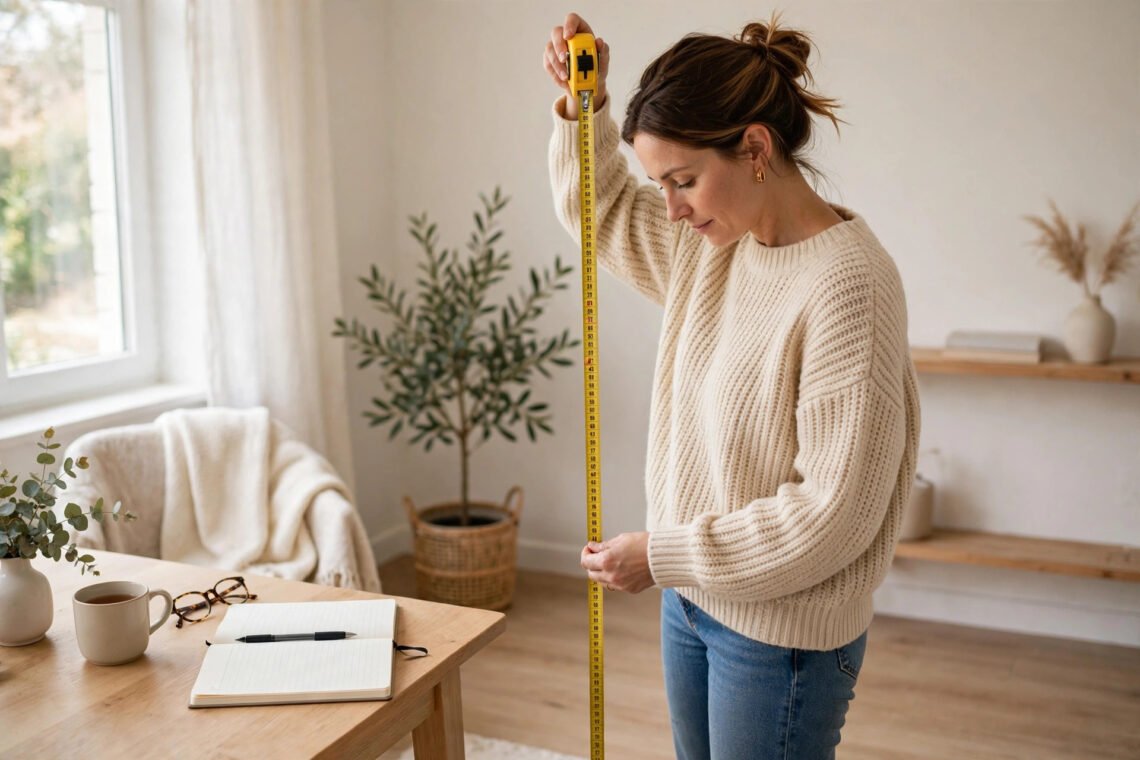
Checking your BMI involves two accurate measurements: your height and your weight. Height is best measured standing straight against a wall, without shoes, with heels together and head level, ideally with someone helping to mark the height accurately. Many adults assume they know their height, but height can change gradually over time, and an out-of-date figure will skew the result. If you have not been measured for a while, it is worth measuring again properly rather than relying on memory or an old driving licence figure.
Weight is best measured on reliable bathroom scales, on a hard, flat floor, ideally at a similar time of day and in similar clothing each time, since weight naturally fluctuates through the day with food, drink, clothing and hydration. Weighing first thing in the morning, after using the bathroom and before breakfast, tends to give the most consistent readings. If you use scales at a gym, pharmacy or GP surgery, those are usually well maintained and can be a good alternative. What matters most is consistency: using the same scales under similar conditions makes trends over time more meaningful than any single reading.
Once you have your height and weight, BMI can be worked out using a standard BMI calculator, many of which are freely available from reputable health services, or by a health professional at an appointment. A calculator simply applies the standard relationship between height and weight and returns a number, along with the broad band that number falls into. There is no need to do the calculation by hand, and there is no benefit in checking repeatedly through the day. A single, carefully taken measurement, repeated occasionally, is more useful than frequent checking, which tends to amplify normal daily fluctuations and create unnecessary worry.
When you receive your result, it will usually be described using broad bands with labels such as underweight, healthy weight, overweight and obesity. These labels are general guides used across populations, not personal judgements. The boundaries between bands are set by health authorities as practical cut-offs for screening, and they are not sharp dividing lines where health suddenly changes. A person just on one side of a boundary is not meaningfully different from a person just on the other side. It is the overall pattern, together with other health information, that matters, not the label alone.

What Does Your BMI Result Mean?
A BMI result in the broad healthy-weight band is generally associated, across populations, with a lower risk of weight-related health problems than results in higher bands. That does not guarantee good health for any individual, and it does not mean other aspects of health can be ignored. A person with a BMI in the healthy band can still have high blood pressure, high blood sugar, poor fitness, or other health issues, and those need attention in their own right. Conversely, a BMI result above the healthy band does not automatically mean a person is unwell. It is a signal that a conversation with a health professional may be worthwhile, particularly if other risk factors are present.
That conversation usually looks at the whole person, not just the number. A GP will typically ask about general health, family history, blood pressure, blood sugar, activity levels, diet, sleep, mood and any medicines being taken. BMI is checked alongside other health measures for exactly this reason: weight rarely exists in isolation, and related conditions are often assessed together. Raised blood pressure, for example, is commonly found alongside higher weight, and the two are often managed together, as our guide to hypertension explains. Similarly, blood sugar problems are strongly linked with weight, a connection explored in our account of how one reader brought raised blood sugar under control. BMI is one thread in that wider picture, not the picture itself.
A BMI result below the healthy band also deserves attention, though it receives less public discussion. Being underweight can be associated with its own health concerns, including low energy, weakened immunity, bone health issues and, for women, disruption to menstrual cycles. Low weight can result from illness, eating difficulties, stress, or simply a naturally slight build, and the appropriate response depends on the cause. As with higher results, the number alone does not explain why, and a health professional is the right person to explore it.
Why BMI Has Limitations, Especially for Women
BMI has real limitations, and several of them affect women in particular. The most fundamental is that BMI cannot tell muscle from fat. A woman who trains regularly and has a high proportion of muscle may have a BMI in a higher band despite having a healthy level of body fat and good fitness. An older woman who has lost muscle over time may have a BMI in the healthy band while carrying a higher proportion of body fat than the number suggests. In both cases, BMI misleads if it is read without considering body composition, fitness and overall health.
Where fat is carried also matters, and BMI says nothing about this. Fat carried around the waist, sometimes called central or abdominal fat, is generally associated with higher health risk than fat carried on the hips and thighs, which is a pattern more common in women before the menopause. Two women with identical BMIs can therefore carry quite different levels of risk, depending on distribution. This is one reason health professionals may also look at waist measurement alongside BMI, and why a single number should never be the sole basis for advice.
Life stages make a further difference. During pregnancy, BMI is not used in the same way, because weight gain in pregnancy is expected, necessary and highly individual, and it reflects the growing baby, increased blood volume and other changes as well as the mother’s own tissues. After pregnancy, weight and body shape change gradually, and returning to a previous weight takes time and should not be rushed. Around the menopause, hormonal changes can shift where fat is stored and affect muscle mass, metabolism and bone health, all of which change what a given BMI means. A BMI chart designed for the general adult population does not capture these shifts, and advice should be tailored accordingly.
Age, ethnicity and individual variation also affect interpretation. BMI bands were developed largely from studies in particular populations, and they may not apply equally to all ethnic groups, some of whom develop weight-related health risks at different BMI levels. Older adults, who naturally lose muscle and bone density, may also need different interpretation. None of this makes BMI useless, but it does mean that a responsible interpretation always considers who the person is, not just what the calculator says.

BMI and Health: What It Can and Cannot Tell You
At its best, BMI is a useful screening prompt. Across large populations, higher BMI bands are associated with higher rates of certain conditions, including type 2 diabetes, heart disease, high blood pressure, joint problems and some cancers. That association is real, and it is why health services continue to use BMI. But an association across a population does not translate into a prediction for an individual. Many people with higher BMIs live long, healthy lives, and many people with BMIs in the healthy band develop health problems. Risk is shaped by genetics, diet, activity, sleep, stress, smoking, alcohol, socioeconomic circumstances and sheer chance, as well as weight.
BMI also says nothing about fitness, diet quality, mental health or quality of life. A woman who eats well, moves regularly, sleeps adequately and feels well is in a different position from a woman with the same BMI who is sedentary, stressed and sleeping poorly, yet BMI treats them identically. Conversely, focusing on BMI alone can encourage unhelpful behaviours, such as crash dieting or excessive restriction, which harm health even if they lower the number temporarily. Sustainable health comes from habits, not from chasing a single figure.
There is also a psychological dimension that deserves honesty. For many women, weight and BMI are emotionally loaded topics, shaped by media images, social pressure and personal history. A BMI result delivered without context can cause distress, shame or disordered eating patterns, particularly for women with a history of eating difficulties. Health professionals are increasingly aware of this, and a good consultation about weight should be respectful, non-judgemental and focused on health and wellbeing rather than appearance. If discussions about weight cause significant distress, or if eating feels out of control, that too is worth raising with a GP, who can offer support without judgement.
Looking Beyond the Number
If you have checked your BMI and are wondering what to do next, the most useful step is to look at the broader picture. Consider how you feel day to day: your energy, sleep, mood, fitness and ability to do the things you enjoy. Consider your habits: are you moving regularly in ways you enjoy, eating a broadly balanced diet, sleeping reasonably well, and managing stress? Consider other health measures: when were your blood pressure and blood sugar last checked, and are there any symptoms or family history concerns worth discussing? These questions give a far richer picture than BMI alone, and they point to actions that genuinely improve health regardless of the number.
Lasting health involves physical, mental and social wellbeing together, not a single measurement, as our guide to the health triangle describes. Small, sustainable changes tend to matter more than dramatic overhauls: regular walking, cooking more meals at home, choosing water over sugary drinks, keeping regular sleep hours, and finding physical activities that are enjoyable rather than punishing. These habits support health at any BMI, and they are worth pursuing for their own sake, not merely as a route to a different number.
If your BMI result concerns you, or if you have other health worries, the right next step is a conversation with your GP. It can help to bring your BMI result, a note of your height and weight measurements, and a list of any questions or concerns. Your GP can check other health measures, discuss whether further assessment is useful, and talk through options that fit your circumstances, whether that involves dietary support, activity programmes, or simply reassurance and monitoring. There is no need to feel embarrassed about raising the topic: weight and health are routine parts of general practice, and GPs discuss them every day.

When to Seek Advice Promptly
Most BMI checks are routine, but some situations deserve prompt professional advice. These include rapid or unexplained weight loss or gain, weight changes accompanied by other symptoms such as persistent tiredness, pain, changes in appetite or bowel habits, or feeling unwell in ways that are new or worrying. Women who are pregnant, trying to conceive, breastfeeding, or going through the menopause and who have weight concerns should seek tailored advice rather than relying on general BMI guidance. Anyone with a history of eating disorders, or who finds that thoughts about weight and food are dominating daily life, should also seek support. In all these cases, a GP is the right first contact, and they can refer onward if specialist input is needed.
It is also worth seeking advice if you are considering a major change to diet or activity, particularly if you have existing health conditions or take regular medicines. Extreme diets, fasting regimes and intense exercise programmes promoted online are not suitable for everyone, and some can be harmful. A GP, dietitian or other qualified professional can help shape a plan that is safe, realistic and suited to your life, rather than a generic programme designed for someone else.
Frequently Asked Questions
How often should I check my BMI?
There is no need to check frequently. An occasional check, using accurate height and weight measurements, is enough to track broad trends over time. Checking daily tends to reflect normal fluctuations in weight rather than meaningful change, and can create unnecessary worry.
Is BMI accurate for women?
BMI is a general screening tool, not a precise measure of health for any individual. It does not account for muscle mass, fat distribution, pregnancy, menopause or ethnic differences, so for women in particular it should be interpreted alongside other health information and professional advice.
Can I have a healthy BMI and still be unhealthy?
Yes. BMI says nothing about blood pressure, blood sugar, fitness, diet quality, sleep or mental health. A person with a BMI in the healthy band can still have health issues that need attention, which is why broader checks matter.
Does BMI apply during pregnancy?
Not in the usual way. Weight gain during pregnancy is expected and individual, and it reflects many changes beyond the mother’s own tissues. Pregnant women should follow advice from their midwife or doctor rather than general BMI bands.
Should I aim for a specific BMI number?
Aiming for a single number is less helpful than focusing on sustainable habits and overall health. If you are concerned about your weight, discuss a realistic and healthy approach with your GP, who can consider your individual circumstances rather than a generic target.
What if my BMI is above the healthy band but I feel well?
Feeling well is important information, but it does not rule out the value of a routine health check. A GP can review blood pressure, blood sugar and other measures, discuss your habits and family history, and advise whether any action is needed or whether monitoring is sufficient.
Conclusion
BMI for women is a starting point, not a verdict. Knowing how to check BMI for women, understanding what the broad bands mean, and recognising the tool’s limitations, especially around muscle, fat distribution, pregnancy and the menopause, puts the number in its proper place: useful as a prompt, misleading as a sole judge of health. What matters most is not a single figure but the broader picture of how you eat, move, sleep and feel, and whether other health measures need attention. If your result raises questions, take those questions to your GP. That conversation, not a calculator, is where personalised health advice begins.
Disclaimer: this article provides general information only and is not medical advice. BMI is a screening tool with important limitations and cannot diagnose any condition or determine individual health on its own. If you are concerned about your weight, your BMI result, or any aspect of your health, please speak to your doctor or GP.
