The pelvic floor is a group of muscles that supports the bladder, bowel and, in women, the uterus. Like other muscles in the body, it can be exercised, and Kegel exercises are the name commonly given to exercises that involve gently contracting and relaxing those muscles. They are widely discussed in women’s health, in pregnancy and postnatal care, and in general wellbeing, and they are often mentioned by healthcare professionals as one part of looking after pelvic health. This article explains, in general terms, what Kegel exercises are, how they are usually described, the mistakes people commonly make, and when it is important to seek professional advice rather than relying on general information.
This article is for general information only. It is not medical advice, and it does not diagnose, treat, or recommend treatment for any condition. Pelvic health is personal, and what is suitable varies from person to person. If you have symptoms, concerns, pain, or questions about your pelvic health, or if you are pregnant, have recently given birth, or have had pelvic surgery, speak to a qualified healthcare professional, such as your GP, midwife, or a pelvic health physiotherapist, before starting or changing any exercise routine. A professional can assess your individual situation, which no general article can do.
What Are Kegel Exercises?
Kegel exercises take their name from Dr Arnold Kegel, who described pelvic floor muscle training in the middle of the last century. In simple terms, the exercises involve identifying the pelvic floor muscles, gently contracting them, holding briefly, and then fully relaxing them. The emphasis on relaxing is as important as the contraction itself: a pelvic floor that can both tighten and let go fully is a healthy pelvic floor, and exercises that focus only on tightening, without release, miss half of the picture.
The pelvic floor muscles are not visible in the way arm or leg muscles are, which makes them harder to learn about at first. Many descriptions suggest imagining that you are trying to stop the flow of urine, or trying to prevent passing wind, as a way of sensing which muscles are involved. That imagery is sometimes used as a one-off way to locate the muscles, but it is not generally recommended as a regular way of exercising, and stopping urine flow repeatedly is not advised as a routine practice. If you are unsure whether you are using the right muscles, a healthcare professional can help you learn, which is far more reliable than guessing from a description alone.
It is also worth understanding that pelvic floor exercises are only one part of pelvic health. The pelvic floor works together with the abdominal muscles, the back muscles, the diaphragm and the hips, as part of a whole system that supports the trunk and manages pressure inside the abdomen. Breathing, posture, everyday movement, and how you lift, cough or sneeze all interact with the pelvic floor. That is why general advice about Kegels often sits alongside broader advice about movement and daily habits, and why a pelvic health physiotherapist may look at the whole picture rather than at one muscle group in isolation.
Why Pelvic Floor Health Matters Across Life
Pelvic floor health matters at every stage of adult life, not only after childbirth, although pregnancy and birth are often the times when people first hear about it. The pelvic floor supports organs, contributes to bladder and bowel control, and plays a role in sexual function and in core stability. Changes across life, including pregnancy, childbirth, menopause, surgery, long-term coughing or straining, and simply getting older, can all affect how the pelvic floor feels and functions. Some people notice changes gradually, while others notice them suddenly after a particular event.
Because the subject is private, many people do not talk about pelvic floor concerns, even with friends or family, and some delay seeking help for a long time. That silence can make a common experience feel isolating. Pelvic floor concerns are widely recognised by healthcare professionals, who discuss them routinely and without judgement. If something feels different, uncomfortable, or worrying, raising it with a GP or a pelvic health professional is a sensible and ordinary step, not something to be embarrassed about. Early conversation is almost always better than silent worry, whatever the outcome.
It is important to be clear about the limits of general information here. This article describes what Kegel exercises are in general terms. It does not say whether they are suitable for you, how often you should do them, or whether they will help with a particular symptom. Those questions depend on an individual assessment, including whether the pelvic floor is underactive, overactive, or affected by other conditions, and they can only be answered by a professional who has examined and spoken to you. Anyone who promises a specific outcome from a general exercise description is overstating what general information can do.
How Kegel Exercises Are Usually Described
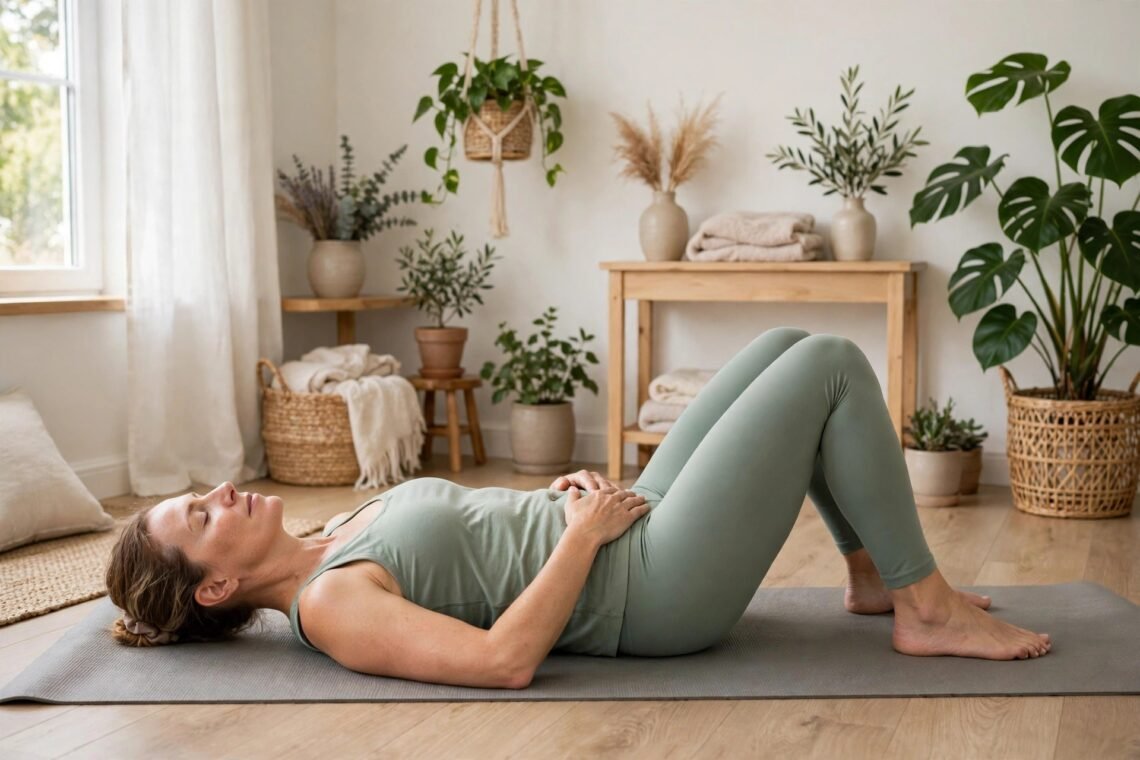
General descriptions of Kegel exercises usually follow a similar pattern. First, find a comfortable position, which may be lying down, sitting, or standing, depending on what feels easiest at first. Lying down is often suggested for beginners, because gravity is not adding extra load, and it can be easier to sense the muscles in that position. Next, gently contract the pelvic floor muscles, as if lifting them upwards and inwards, while keeping the rest of the body as relaxed as possible. The contraction is usually described as gentle rather than forceful: a subtle lift, not a strain.
The contraction is then held briefly, and then released fully, with a conscious pause to let the muscles relax completely before the next repetition. Breathing normally throughout is usually emphasised, because holding the breath and bearing down changes the pressure in the abdomen and works against the exercise. The exercise is then repeated a small number of times in a set, with rest between sets. General descriptions often suggest practising regularly, as part of a daily routine, rather than doing a large number of repetitions once in a while, because consistency matters more than intensity for muscle learning.
Position and progression are usually described in stages. Once the muscles can be felt while lying down, a person may be guided to practise sitting or standing, where gravity adds more challenge. Some descriptions also mention quicker, shorter contractions alongside longer holds, because the pelvic floor needs both endurance and responsiveness in daily life. Again, these are general descriptions of how the exercises are commonly explained, not a programme to follow. A pelvic health professional can tailor the approach, including whether longer holds, shorter contractions, or a focus on relaxation is appropriate for a particular person.
Common Mistakes to Avoid
Several common mistakes can make Kegel exercises less effective, or uncomfortable, and they are worth knowing about even in general terms. The first is using the wrong muscles: squeezing the thighs, buttocks or abdominal muscles strongly, or holding the breath, instead of a gentle pelvic floor contraction. If the whole body tenses, or the breath stops, the pelvic floor is probably not working in isolation. A second mistake is overdoing it: practising with force, for long periods, or very frequently, in the belief that more must be better. Muscles need rest as well as work, and a pelvic floor that is constantly tightened without full relaxation can become tense and uncomfortable.
A third mistake is practising while urinating as a routine. As noted above, imagining the stop of urine flow may help some people locate the muscles once, but repeatedly stopping the flow is not generally advised, and it can interfere with normal bladder emptying. A fourth mistake is expecting quick or guaranteed results, or continuing with an exercise that causes pain, discomfort, or new symptoms, without seeking advice. Pain during or after pelvic floor exercises is a reason to stop and speak to a healthcare professional, not a sign to push through. Finally, many people practise for a short time, notice nothing dramatic, and give up. Muscle learning is gradual, and general descriptions often note that patience and regularity matter, but that is a general observation, not a promise about any individual outcome.

Pelvic Floor Exercises in Pregnancy and After Birth
Pregnancy and the postnatal period are times when pelvic floor health receives particular attention, and for good reason. During pregnancy, the growing uterus places extra load on the pelvic floor, and hormonal changes affect the tissues. During birth, the pelvic floor stretches considerably. After birth, many people are advised to think about pelvic floor recovery as part of their general recovery, alongside rest, nutrition, and gradual return to activity. Midwives and pelvic health physiotherapists commonly discuss pelvic floor exercises in this context, and they can give guidance tailored to the type of birth and to individual recovery.
This general article cannot give pregnancy or postnatal guidance, because the right approach depends on individual circumstances, including the stage of pregnancy, the birth experience, any tears or surgery, and any symptoms. Anyone who is pregnant or has recently given birth should follow the guidance of their own midwife, GP or pelvic health physiotherapist, and should raise any concerns, such as heaviness, pain, or bladder or bowel changes, promptly rather than waiting for a routine appointment. The postnatal period is also a time when rest matters, and when pressure to return to exercise quickly can be unhelpful. Recovery is not a race, and professional guidance should set the pace.
When to Seek Professional Advice
There are several situations in which speaking to a healthcare professional is particularly important, rather than relying on general information. These include pain in the pelvic area, a feeling of heaviness or dragging, a bulge, bladder or bowel changes that are new or persistent, difficulty emptying the bladder or bowel, leaking that affects daily life, pain during intimacy, or any concern after childbirth or pelvic surgery. They also include uncertainty about whether you are doing the exercises correctly, or whether exercises are suitable for you at all. None of these situations is a reason for embarrassment, and all of them are reasons to seek a professional assessment.
A pelvic health physiotherapist is a physiotherapist with specialist training in pelvic health, and they are often the professional best placed to assess the pelvic floor, teach exercises correctly, and advise on daily habits. A GP can refer, and in some areas people can self-refer to pelvic health physiotherapy services. A midwife is a key source of advice during pregnancy and after birth. Whatever route you take, the first step is simply describing what you have noticed, in your own words. Healthcare professionals hear these descriptions every day, and a clear description helps them help you.
It is also worth seeking advice if general exercises do not seem to help, or if symptoms change or worsen. Pelvic health is complex, and exercises are not the answer to every pelvic concern. Some concerns relate to muscle overactivity, where relaxation and down-training matter more than strengthening. Others relate to conditions that need medical assessment or treatment beyond exercise. A professional assessment distinguishes between these situations, which is exactly why general articles, however well written, cannot substitute for one.
Building a Sustainable Habit
For people who have been advised by a professional that pelvic floor exercises are suitable for them, building the habit into daily life is usually more sustainable than setting aside a special exercise session. Many people link the exercises to an existing routine, such as brushing teeth, waiting for a kettle to boil, or sitting at a desk, so that the practice becomes part of the day rather than another task to remember. Because the exercises are discreet and need no equipment, they can be done in many settings, which helps regularity. The key, in general terms, is consistency over time, combined with full relaxation between contractions, and with attention to breathing and to not tensing the rest of the body.
Daily habits beyond the exercises themselves also support pelvic health in general terms. Staying active with walking and gentle movement, avoiding prolonged straining, managing constipation through diet and fluids where appropriate, and lifting with care are all commonly mentioned as part of looking after the pelvic floor. These are general wellbeing points, not medical recommendations for any individual, and anyone with specific concerns should discuss them with a professional. The broader point is that pelvic health is not a separate compartment of life: it is connected to how you move, breathe, rest and eat, every day.

Tracking how you feel over time can also be helpful, in a simple, non-obsessive way. Noting, for example, whether certain activities feel easier or more comfortable, or whether symptoms change, gives you useful information to share with a healthcare professional at your next appointment. It also helps you notice gradual change, which is easy to miss day by day. Keep any notes factual and brief, and bring them to appointments if that feels helpful. You do not need an app, a chart, or a strict regime to benefit from paying attention to your own body.
Frequently Asked Questions
What exactly is the pelvic floor?
The pelvic floor is a group of muscles and tissues that spans the bottom of the pelvis, supporting the bladder, bowel and, in women, the uterus. It works with the abdominal, back and breathing muscles to support the trunk and manage pressure inside the abdomen.
Are Kegel exercises only for women?
No. Although this article is written for a women’s health category, pelvic floor exercises are also discussed for men, particularly after certain types of surgery or in relation to bladder and bowel function. The principles are similar, but individual guidance still matters, and men with concerns should speak to their own healthcare professional.
How do I know if I am doing Kegel exercises correctly?
That is difficult to judge from a written description alone, because the muscles are internal and not visible. A gentle lift and release, without tensing the thighs, buttocks or abdomen strongly, and without holding the breath, is the general description. If you are unsure, a pelvic health physiotherapist can assess and teach you directly, which is the reliable way to learn.
Can Kegel exercises cause harm?
General descriptions note that overdoing exercises, using force, or practising through pain can cause discomfort, and that exercises may not be suitable for everyone, particularly where the pelvic floor is overactive. If exercises cause pain or new symptoms, stop and seek professional advice rather than continuing.
Should I do Kegel exercises during pregnancy?
Pelvic floor exercises are commonly discussed during pregnancy, but the right approach depends on the individual pregnancy and on professional guidance. Pregnant readers should follow the advice of their own midwife, GP or pelvic health physiotherapist, and raise any concerns promptly.
Conclusion
Kegel exercises are a widely discussed part of pelvic floor health: gentle contractions and full relaxations of the muscles that support the pelvic organs, practised regularly and with attention to breathing and to the rest of the body. They are simple to describe and, for people who have been advised that they are suitable, they can become a discreet part of daily life. But simplicity of description should not be mistaken for simplicity of judgement. Whether they are suitable for you, how they should be practised, and what else your pelvic health may need are questions that only a professional who knows your situation can answer. If you take one message from this article, let it be this: pelvic floor concerns are common, they are routinely discussed by healthcare professionals without judgement, and seeking advice is a sensible, ordinary step. General information can explain what Kegel exercises are. A professional can tell you what, if anything, they mean for you, and that conversation is always worth having.